Professor Dr. Abdul Hakim Sarker
Institute of Social Welfare and Research
University of Dhaka
Institute of Social Welfare and Research
University of Dhaka
Scholar • Social Welfare Expert • Criminologist • Researcher
Institute of Social Welfare and Research (ISWR)
University of Dhaka
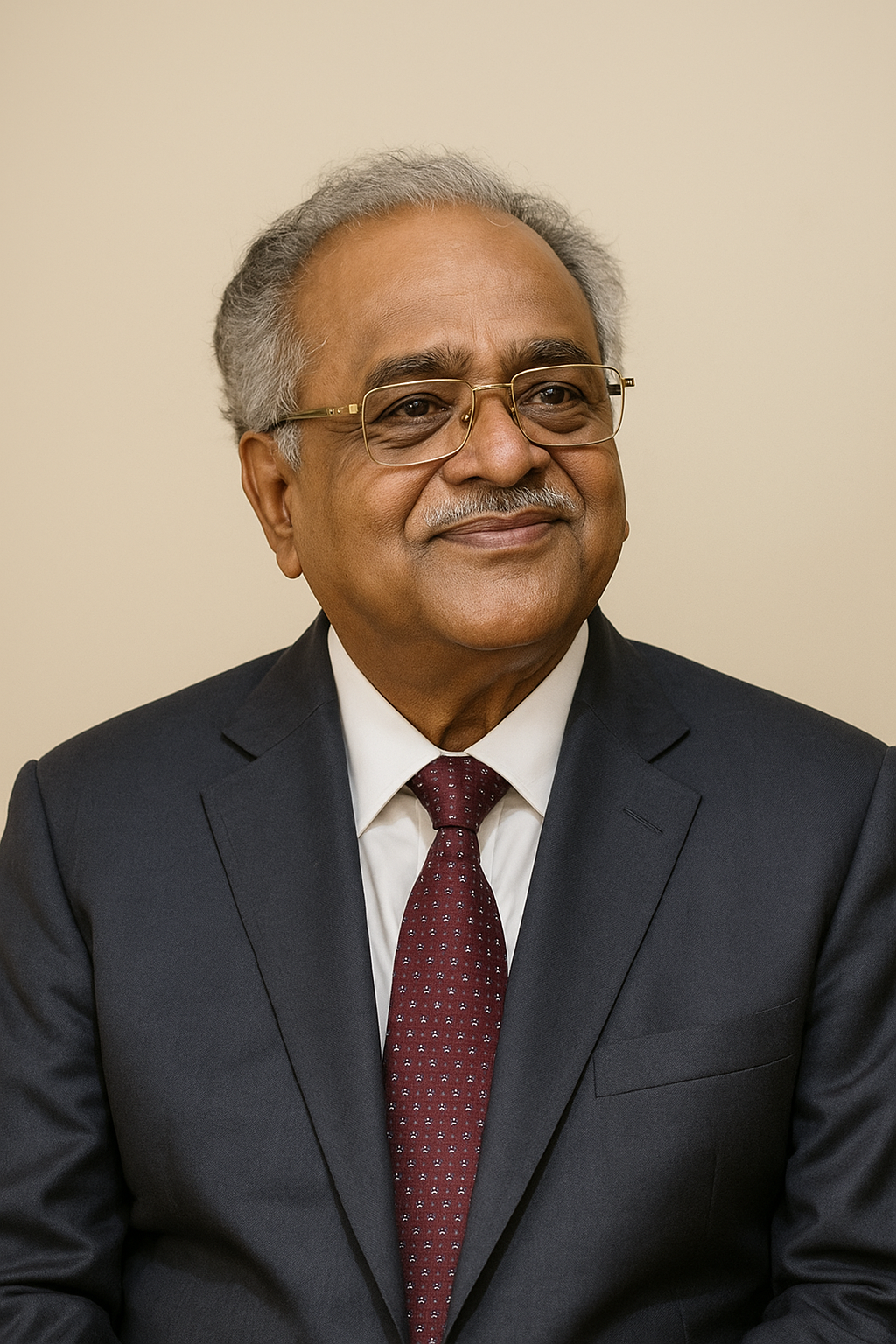
Professor Dr. Abdul Hakim Sarker
PhD in Social Welfare
Professor Dr. Abdul Hakim Sarker is a distinguished academician, researcher, and social welfare expert who has dedicated his life to advancing social sciences education and research in Bangladesh.
Born on October 4, 1947, Professor Sarker pursued his Master's degree in Social Welfare from the University of Dhaka in 1969. He later earned his PhD in 1988, establishing himself as a pioneering scholar in the field of social welfare and criminology.
With an illustrious career spanning over five decades, he served as Professor at the Institute of Social Welfare and Research (ISWR), University of Dhaka, and held the prestigious position of Vice-Chancellor at Islamic University, Kushtia. His contributions to social work education, criminology research, and policy development have been widely recognized both nationally and internationally.
Professor Sarker has authored numerous books and research papers on social welfare, juvenile delinquency, victimology, and restorative justice. His work has significantly influenced social policy formulation and implementation in Bangladesh.
From 1947 to 2025 and A Legacy of Academic Excellence in Futuristic Approach by the Torch Bearers and Bringing the Light for All
Born in far end northern peaceful hillside of the country
Completed MA in Social Welfare from the University of Dhaka, laying the foundation for a distinguished academic career.
Earned PhD degree, becoming one of the leading scholars in social welfare research in Bangladesh.
Appointed as Director of the Institute of Social Welfare and Research, University of Dhaka.
Served as Vice-Chancellor of Islamic University, Kushtia, leading the institution to new heights.
Continues to contribute to academia through research, publications, and mentorship of young scholars.
Comprehensive research on social welfare systems, policies, and their implementation in developing nations.
Explore Research →Study of criminal behavior, crime prevention strategies, and the criminal justice system in Bangladesh.
Explore Research →Groundbreaking research on causes, patterns, and prevention of juvenile delinquency in urban Bangladesh.
Explore Research →Research focusing on crime victims, their rights, support systems, and restorative justice approaches.
Explore Research →Development of restorative justice frameworks and alternative dispute resolution mechanisms.
Explore Research →Curriculum development and pedagogical innovations in social work and welfare education.
Explore Research →A comprehensive study examining the causes, patterns, and prevention strategies for juvenile delinquency in Dhaka city.
An analysis of adapting Western social work theories and practices to the Bangladeshi context.
Exploring traditional and modern approaches to restorative justice in the Bangladeshi legal and social framework.
Investigating the relationship between family poverty and juvenile delinquency in urban Bangladesh.
Access Professor Sarker's complete collection of books, research papers, and academic writings. All materials are freely available for reading, study, research, and scholarly citation.
Presented papers on social welfare and community development at international conferences in Bangkok.
Participated in academic exchanges and conferences on criminology and social justice in Seoul.
Presented research on juvenile delinquency prevention at international symposiums in Tokyo.
Active participation in South Asian conferences on social work education and research.
Consultant and presenter for United Nations development programs and educational initiatives.
Collaborated on international development projects and policy research initiatives.
Beginning of a transformative academic and social journey
Continuous commitment to academic excellence, research innovation, and social welfare advancement
Dedicated contributions to ISWR, University of Dhaka, and global social welfare education
Transforming Academic Knowledge into Applied Social Change
Documenting and archiving scholarly contributions, research methodologies, and intellectual traditions for future generations
Providing open educational resources and free access to research, publications, and academic materials globally
Creating intelligent systems that support social welfare education and research through advanced AI technologies
Fostering global research partnerships, interdisciplinary collaboration, and collective knowledge creation
Building scalable, immersive, and technology-enabled platforms for next-generation social work education
Creating networks of researchers, practitioners, and students committed to social welfare innovation
Intelligent Academic Companion
QiM-AI 2.1 is an advanced artificial intelligence platform designed to support scholarly research, provide personalized learning experiences, and enable intelligent knowledge discovery across social welfare and criminology domains.

A trusted archival system for scholarly works, peer collaboration, and verified knowledge exchange.
Store research papers, theses, presentations, and archival evidence with structured metadata and version tracking.
Facilitate interdisciplinary co-authorship, peer review, and annotation across social welfare, criminology, and education.
Support scholarly citation management, DOI registration, and archival provenance for every contribution.
Advanced role structures for administrators, editors, contributors, and public visitors to support governance.
Future-Oriented Interdisciplinary Innovation Platform
Interdisciplinary research environments where scholars co-create innovative social welfare solutions
Interactive simulations for social work practice, enabling safe exploration of complex scenarios
Experimental environments for testing and developing innovative social welfare policies
Immersive virtual environments for experiential learning and practice-based education
Holistic organizational care, research coordination, and institutional development
Societal connectivity, community engagement, and relationship development
Supporting coordination, communication, and outreach for the academic and research ecosystem.